
Does Frost in the Freezer Mean Food Is Bad? What the Ice Tells You
Frost on frozen food is a quality issue, not a safety one, if it stayed at 0°F. See why frost forms, how Sub-Zero defrost works, and why not to chip it.
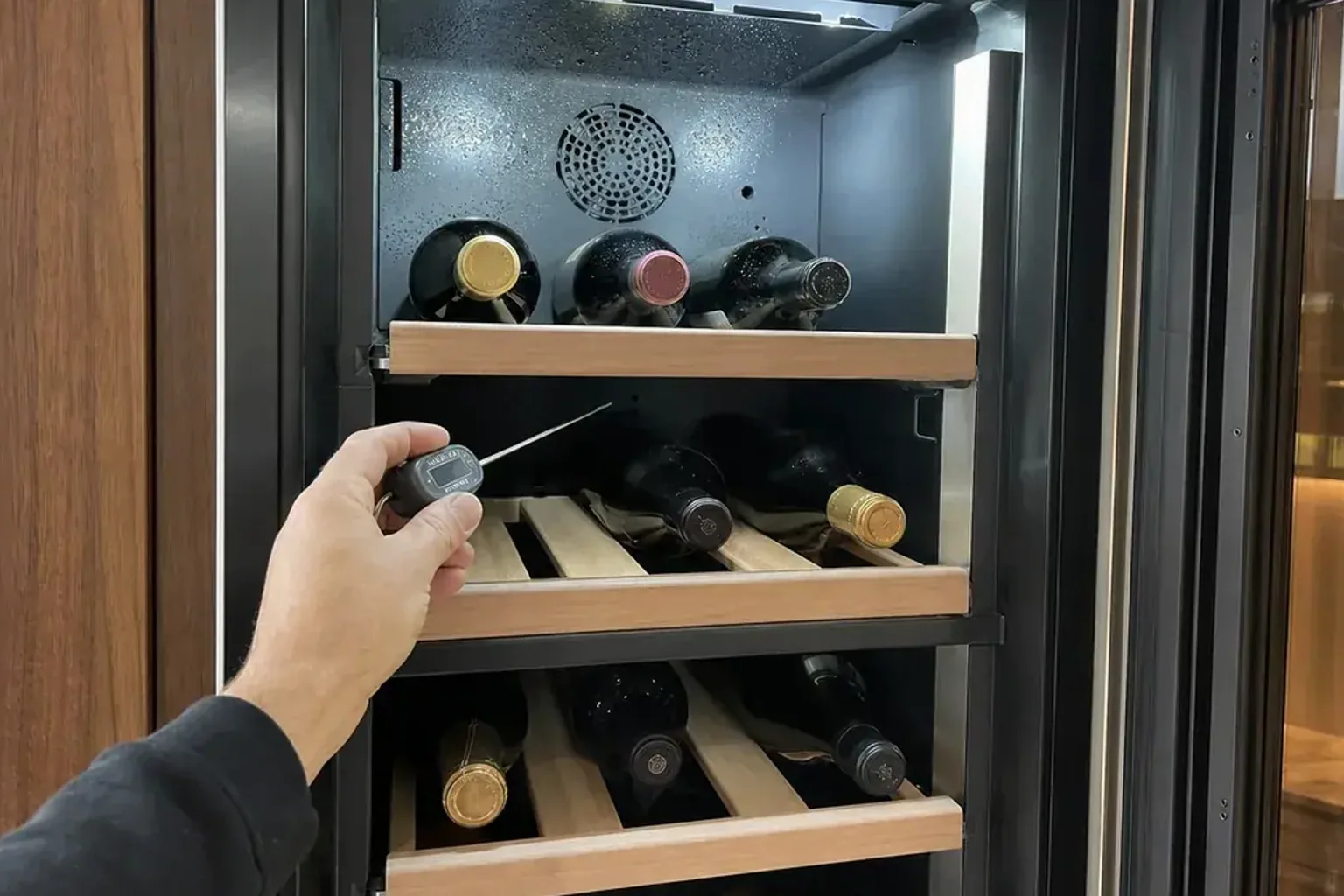
Frost in the freezer does not mean the food is bad: anything that stayed frozen at 0°F remains safe to eat, and frost on a package mostly signals lost quality, such as freezer burn. What the ice reveals is moisture getting in, or a freezer no longer clearing its own coil.
Is frosty food still safe to eat?
Freezing does not kill bacteria, but a steady 0°F stops their growth, so food that never thawed is safe however much frost coats it.
Freezer burn is that quality loss made visible: moisture leaves the food and refreezes as crystals, leaving dry, gray-brown patches.
A solid sheet of ice inside a freezer bag hints at a thaw and refreeze. Food still holding ice crystals or at 40°F or below can be refrozen; perishables above 40°F for over 2 hours go in the trash.
Why does frost form on food and freezer walls?
Freezer frost starts as water vapor. Humid kitchen air enters with every door opening and freezes onto the coldest surfaces: packages, walls and the evaporator coil. Warm leftovers and loosely wrapped meat add moisture too, which is why frost often grows inside the bag.
Sudden frost over a few days usually means an air leak: a torn Sub-Zero door gasket or a drawer propped open by an overfilled basket.
How does the defrost system clear the coil?
A Sub-Zero freezer is frost-free: a fan blows air across an evaporator coil, a heater melts its frost on a cycle, and a bimetal defrost terminator ends the heat once the coil is clear. If a Sub-Zero defrost part fails, ice chokes the coil and the freezer warms.
EC20 on some Sub-Zero models points to the freezer defrost terminator; no owner troubleshooting exists, so book service.
On certain Sub-Zero built-ins, 20 2 50 flags an open defrost heater, and 20 4 50 means four straight defrost timeouts because the bimetal never tripped. Reset the breaker for 30 seconds, then call for service.
On the Sub-Zero 648PRO, a defrost bimetal fault calls for a 30-second breaker reset, a retest, and service if the code returns.
Should you chip the ice off with a knife?
No. USDA FSIS warns against ice picks, knives, other sharp objects and electrical heating devices for removing frost, because they can damage the inner lining. In a Sub-Zero, a slipped blade can pierce refrigerant tubing, turning a frost nuisance into sealed-system work.
The safe Sub-Zero manual defrost: food into a cooler, unit off, door propped open, towels down, then patience while the ice melts. Reload once the freezer is back near 0°F.
What can owners check before booking a visit?
Close the Sub-Zero door on a strip of paper at several points; if it slides out with no drag, the gasket leaks. ENERGY STAR advises airtight door seals, replacing worn ones, and short door openings. USDA FSIS recommends keeping the front grille free of dust and lint and cleaning the condenser coil several times a year with a brush or vacuum, per the use-and-care manual.
When does frost signal a repair?
Frost that returns within days of a manual defrost, a Sub-Zero freezer running warm while the compressor hums, or any defrost alarm needs a technician. The diagnostic visit has an $89 fee, credited toward the repair.
Questions & answers
Can you eat food from the freezer that has frost on it?
Yes, if the food stayed frozen near 0°F. Frost affects flavor and texture, not safety; discard perishables only if they thawed above 40°F for more than 2 hours.
Is freezer burn safe to eat?
Yes. Freezer burn is surface dehydration, not spoilage; trim the dry, gray-brown patches, which cook up tough.
Is it bad to have frost in your freezer?
A light dusting is normal; thick or fast-returning frost is not. In a frost-free Sub-Zero, heavy frost usually means a leaking gasket, a door left ajar, or a defrost fault.
How do I keep frost off frozen food?
Wrap food tightly, press air out of bags, cool leftovers before freezing, keep door openings short, and confirm a steady 0°F with a thermometer. Milpitas Sub-Zero Repair handles this locally — call (669) 336-6357.
More Milpitas guides
- How it works · 5 min Is It Normal for a Fridge to Be Wet Inside? Where the Water Comes From Light beading on a fridge's back wall is normal; standing water is not. How Sub-Zero Dual Refrigeration, defrost drains and door gaskets make a fridge wet. Read the guide →
- Installation guide · 3 min How to Install a Wall Oven: Cutout, Circuit and Lift, in Order Install a wall oven in 5 checks: cutout size, a dedicated 240-volt circuit, junction box placement, a safe two-person lift and level trim. Wolf-focused tips. Read the guide →
- Temp Sensors · 4 min Sub-Zero Temperature Sensor Problems in Milpitas: Myths vs. Reality How a drifting Sub-Zero temperature sensor causes over-cooling and warm spots in Milpitas, and how to tell it from a board or sealed-system problem. Read the guide →
Rather leave it to a specialist?
For service, call now or use the external online booking page.
| Safe-storage temperature | Food that stays frozen at 0°F remains safe; frost only lowers quality |
|---|---|
| Refreeze rule after a warm-up | Food with ice crystals or at 40°F or below can be refrozen; perishables above 40°F for over 2 hours go out |
| Never use on frost | A knife, ice pick or electrical heating device, which can damage the inner lining |
| Where DIY stops | Gasket, grille and coil checks are owner steps; returning frost or a defrost code such as EC20 needs a technician |
| Who to call | Milpitas Sub-Zero Repair — (669) 336-6357 |
Need this handled? Sub-Zero Door Gasket and Seal Repair in Milpitas · Sub-Zero Error Codes List & Alarms in Milpitas